










.svg)





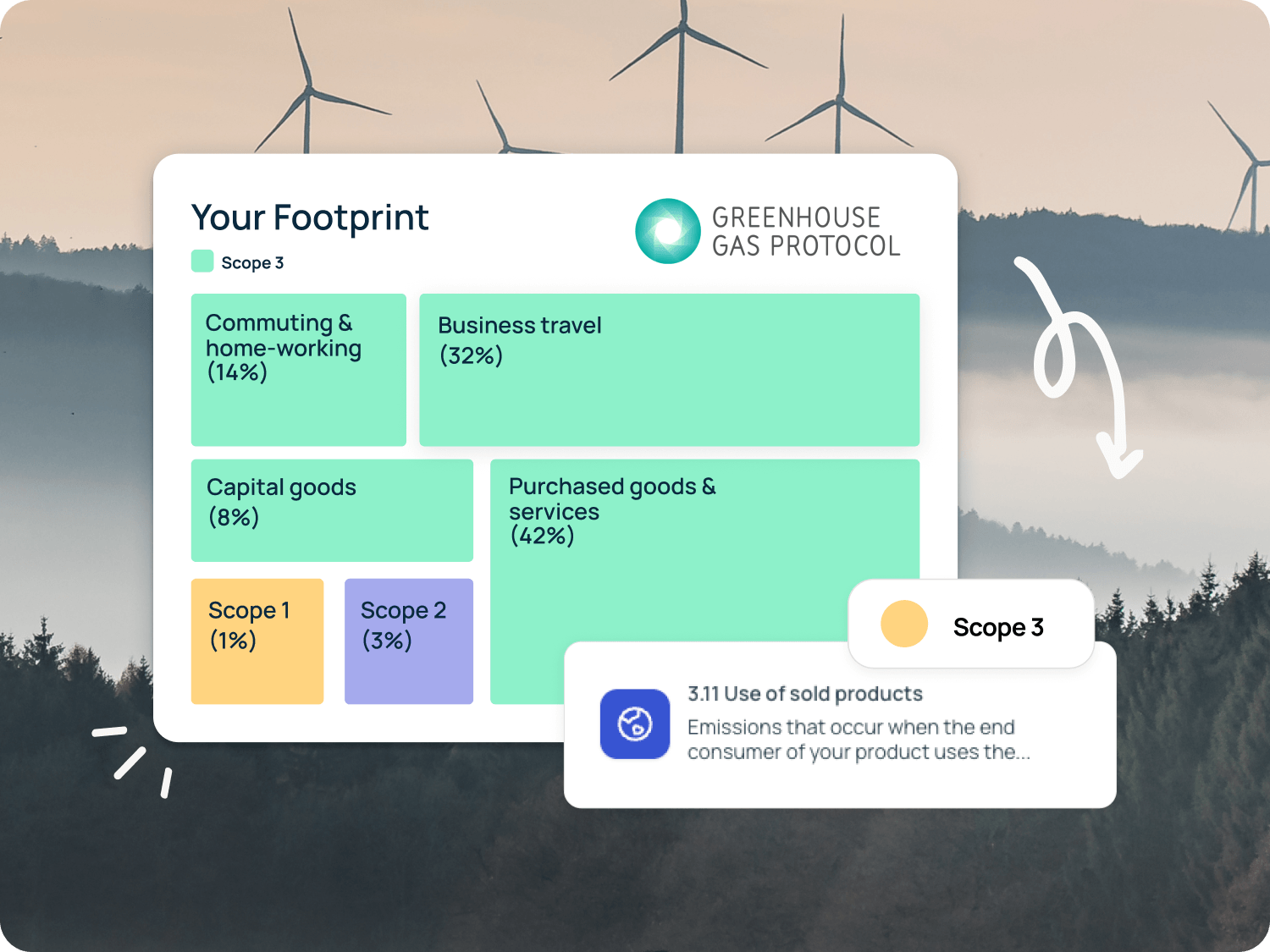
For most businesses, Scope 3 is the biggest part of their carbon footprint, and the hardest to measure. In many organisations, more than 90% of total emissions sit within Scope 3, making it essential for understanding and reporting your overall carbon impact.
Whether you're reporting for customers, procurement, investors or regulation, the quality of your Scope 3 data matters. Better data leads to more credible reporting, helps you demonstrate the impact of emissions reduction initiatives over time, and gives you greater confidence when responding to frameworks such as PPN 006 and B Corp.
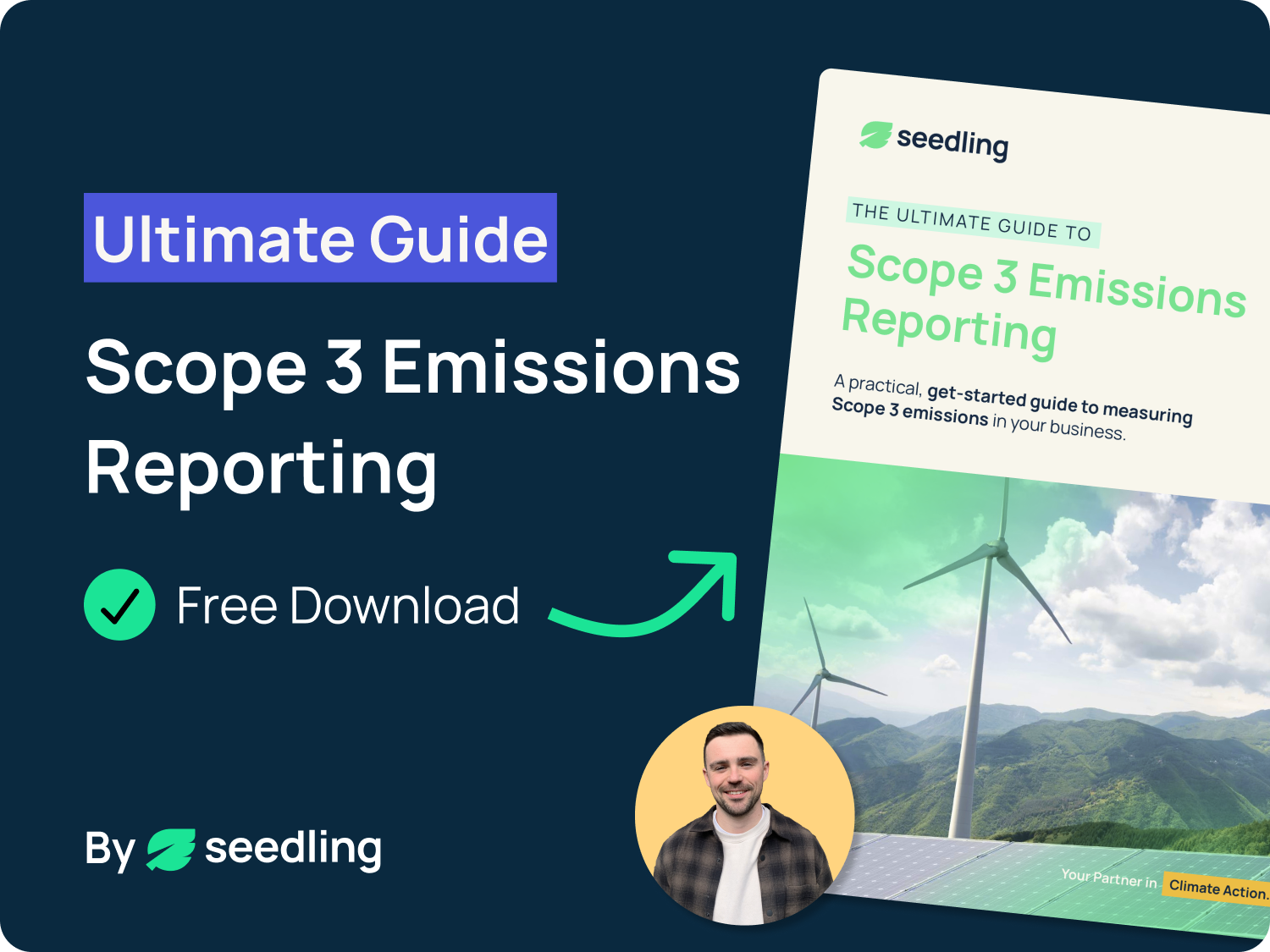
Inside, you'll find a step-by-step way to work through all 15 GHG Protocol Scope 3 categories, with worked examples and real client case studies throughout. There's also a five-point list of top tips you can put into action straight away, covering everything from prioritising supplier data requests to using hotspot analysis to focus your time where it counts.
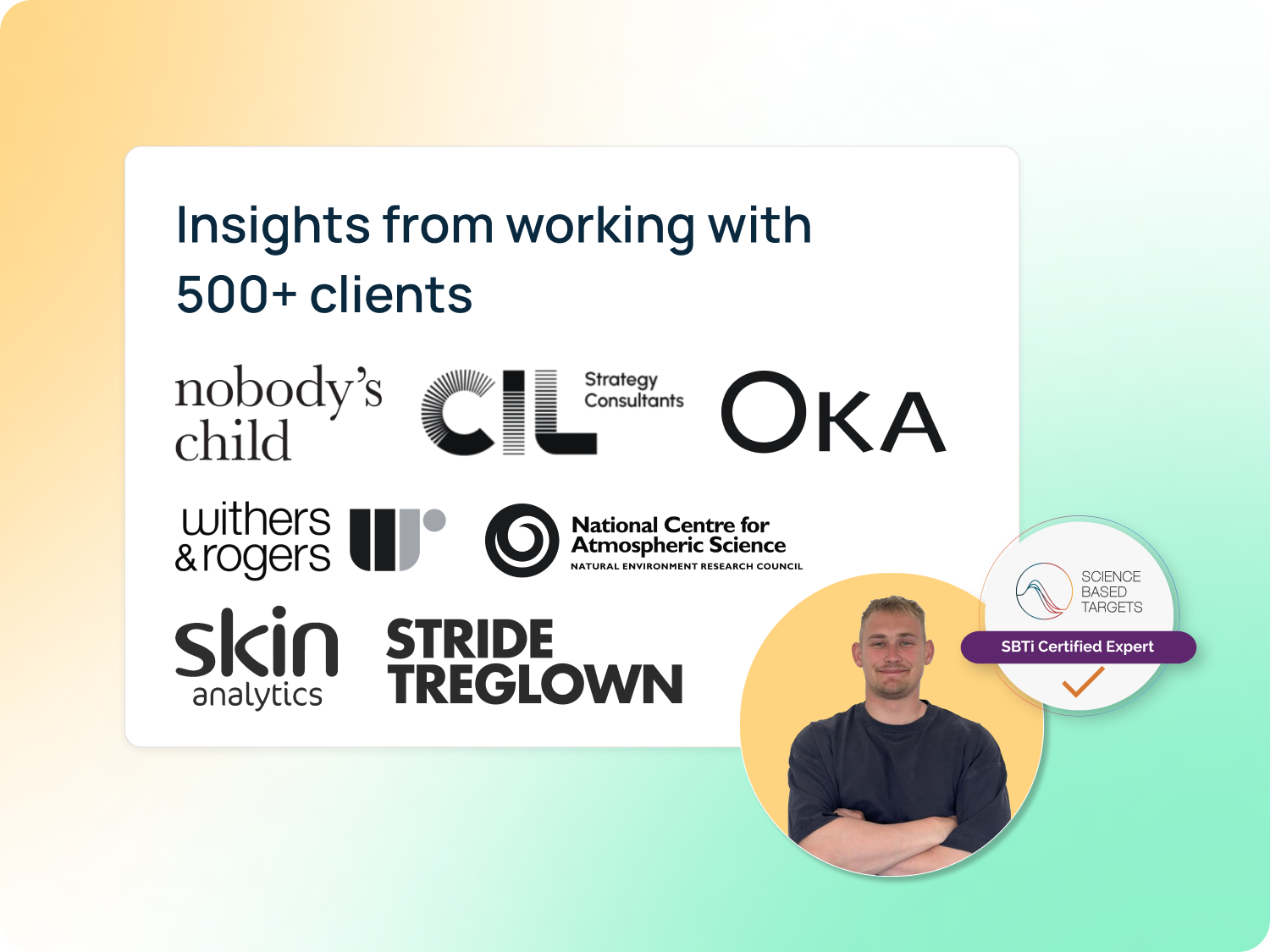
It's written by Seedling's carbon experts, including Henry Jones, one of the UK's few SBTi Certified Experts, for teams who need a credible footprint but might not have a dedicated, well-resourced in-house sustainability function.
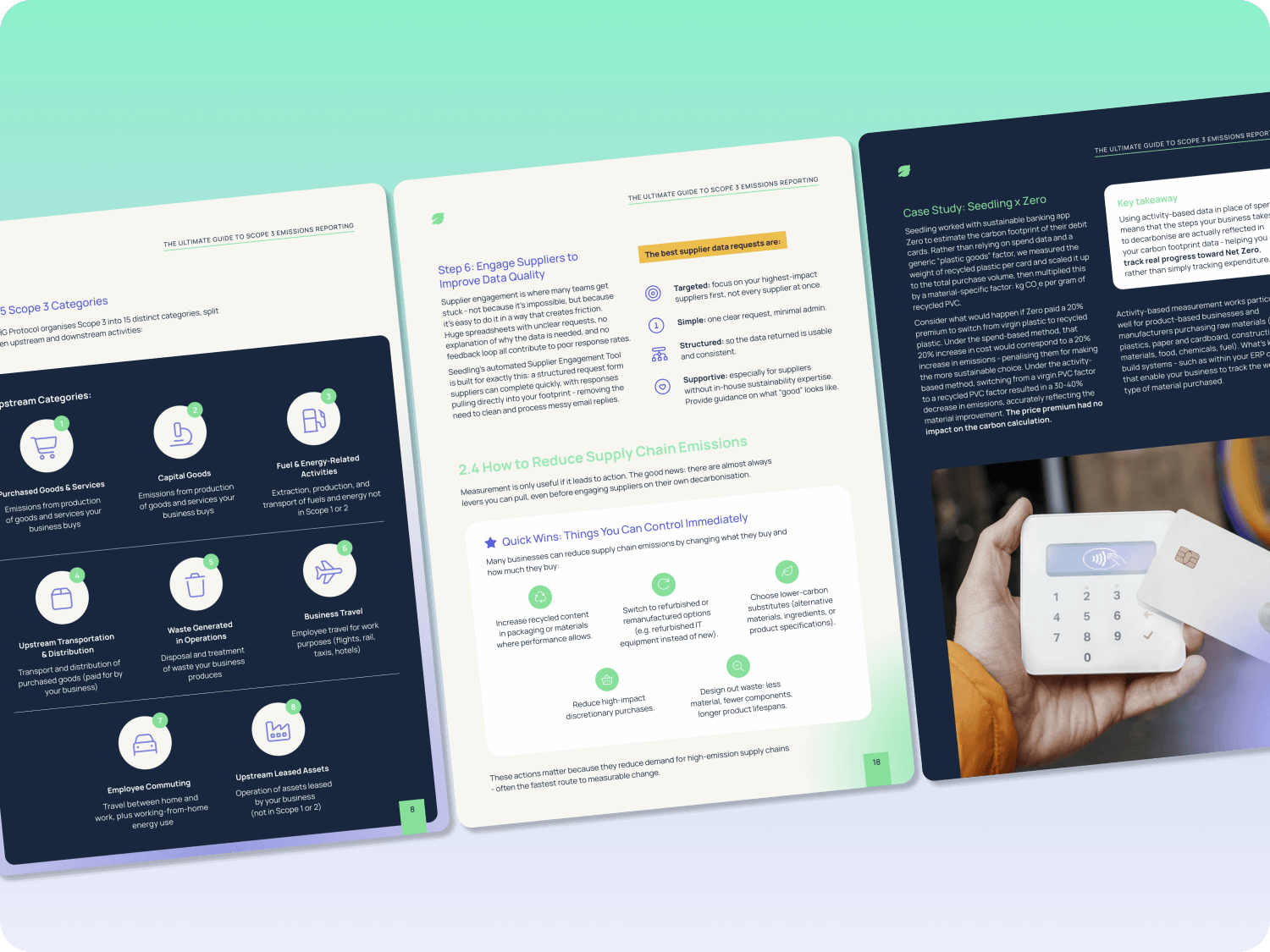
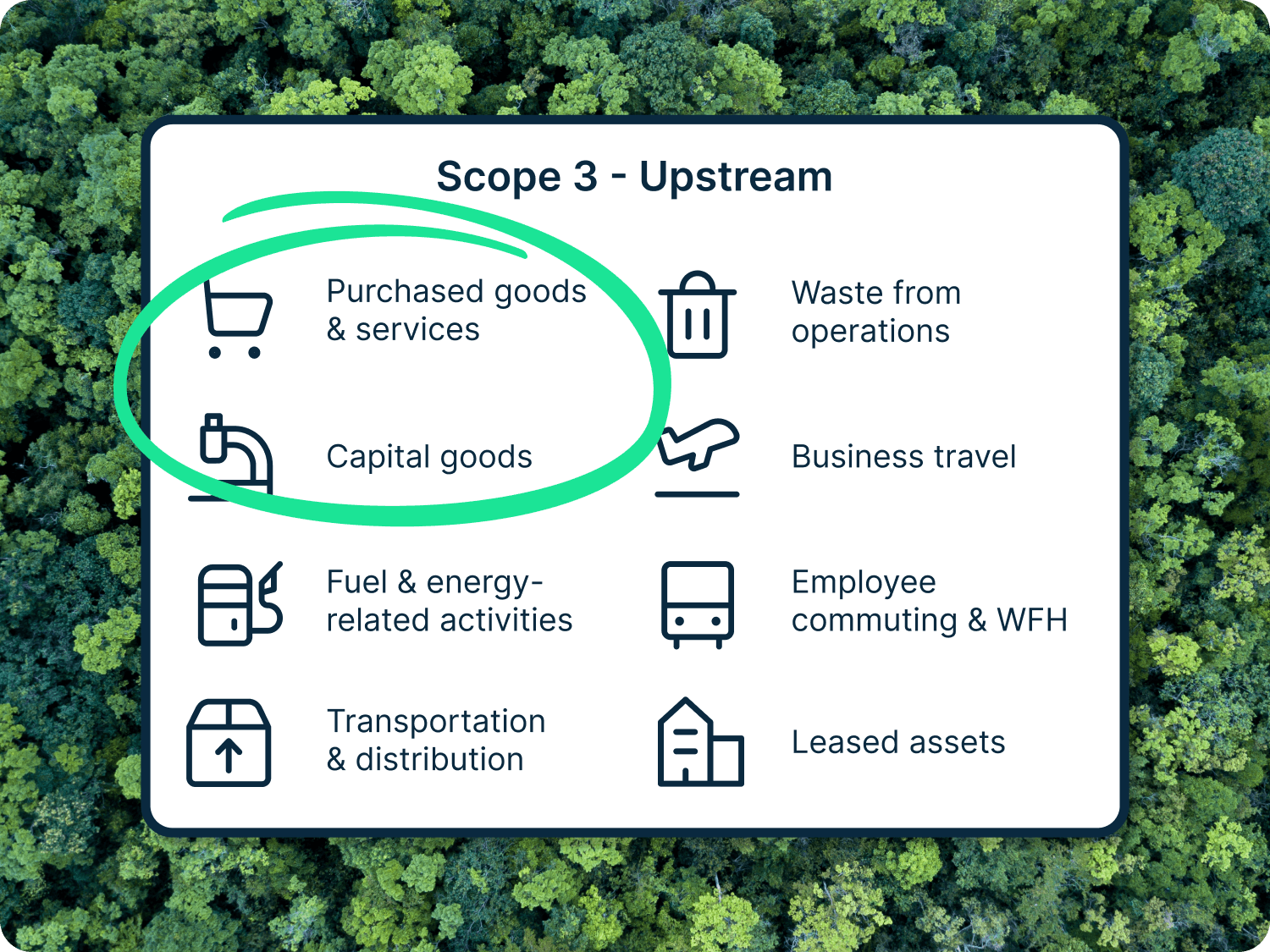
Purchased goods and capital goods (Categories 1 and 2) make up the largest, and most complicated, part of most Scope 3 footprints. The guide walks through a layered way to tackle it: start with a spend-based baseline, use hotspot analysis to find your highest-impact suppliers, then move to activity-based and supplier-specific data as you're able to.
Worked examples run throughout, including real client case studies, so you can see how the method plays out in practice rather than just reading about it in theory.
Everything in this guide comes from Seedling's day-to-day work helping businesses across manufacturing, professional services, technology and more build credible Scope 3 footprints. Henry Jones, one of only a handful of SBTi Certified Experts in the UK, has shaped the guidance throughout.
Wherever you're starting from, you'll come away with a practical approach you can put into action straight away, and Seedling's team is always on hand if you need help applying it.
Fill in the form below to get your copy.
Your questions answered
Scope 3 covers the indirect emissions across your value chain, both upstream (like purchased goods and business travel) and downstream (like product use and disposal). The GHG Protocol splits it into 15 categories in total. It's often hard to measure because it involves data you don't directly control, often spread across hundreds of suppliers, but for most businesses it's also the biggest part of the footprint, so accuracy is crucial.
Not every category will be relevant to your business. A software company, for example, is unlikely to have material emissions from product distribution, use of sold products, or end-of-life treatment, while a manufacturer likely will. The guide recommends screening each category for relevance, measuring the ones that matter, and being transparent about what you've included and excluded, and why.
It's a solid starting point. Spend-based data is quick to pull together and useful for building a first full picture and spotting your highest-impact suppliers. The guide explains how to layer in more accurate activity-based and supplier-specific data over time, so your footprint reflects real progress, not just changes in spend.
The guide sets out what makes supplier data requests actually work: keeping them targeted at your highest-impact suppliers first, simple to complete, structured so the data's usable, and supportive for suppliers without their own sustainability expertise.
Yes. Alongside the categories that apply to every business, there's a dedicated section covering distribution, use of sold products and end-of-life treatment - the categories most relevant if you manufacture or sell physical goods.
Book a demo or get in touch and we'll be happy to help.
.svg)


.png)